Couples Therapy for Intimacy and Emotional Closeness
Partners usually arrive in therapy after a drift they cannot quite name. The conversations sound functional enough, calendars run on time, and yet the air between them feels thin. Some couples come in three years after their first child, others after a career change or a move. I have also met partners who remain tender and sexual yet feel strangely alone. Intimacy is not a single skill, it is a living system that draws on nervous systems, histories, daily rituals, and the courage to be seen. Couples therapy can be a workshop, a laboratory, and in the best cases a sanctuary where that system is tuned back into resonance.
Why closeness frays even in good relationships
Closeness rarely evaporates overnight. More often it erodes through dozens of moments that do not get repaired. A partner shares a small hurt, the other is distracted and misses it. A joke lands flat, nobody returns to it. One person initiates sex and gets a neutral response, then stops trying. Each unaddressed moment adds a thread of resentment or caution. Over time, couples build an informal treaty: we will avoid the topics that spark conflict. The treaty keeps the peace and quietly taxes desire, play, and spontaneity.
Intimacy also competes with stress. When a body runs on adrenaline and calendars fill every evening, the parts of the brain that track nuance and pleasure have less room to operate. I have watched loving couples reawaken in as little as four weeks when they reduce even 20 percent of overload and introduce five minutes a day of intentional contact. The change is not magic, it is physiology and attention working in tandem.
The nervous system’s role, and why Somatic therapy tools help
Closeness lives in bodies as much as in words. A partner who turns away mid-sentence can trigger a faint surge of alarm if your nervous system learned early that silence meant danger. Another person may crave more space because proximity feels like pressure. Somatic therapy tools bring these patterns into focus without shaming them. When couples learn to notice breath, muscle tone, and micro-reactions, they can intervene earlier and more kindly.
In practice, I might slow a conversation to half speed. Each partner speaks for 30 seconds, then both pause to notice sensations in shoulders, throat, or belly. We track shifts: Did your breath tighten when he said he felt lonely? Did your jaw clench when she mentioned money? Small awareness upgrades change outcomes. For example, a client realized her chest compressed every time her partner used an analytical tone during conflict. Naming that physical cue allowed them to add a simple repair: he put a hand on his own heart and softened his voice for the first sentence. The content of their argument did not change, yet their bodies stopped bracing.
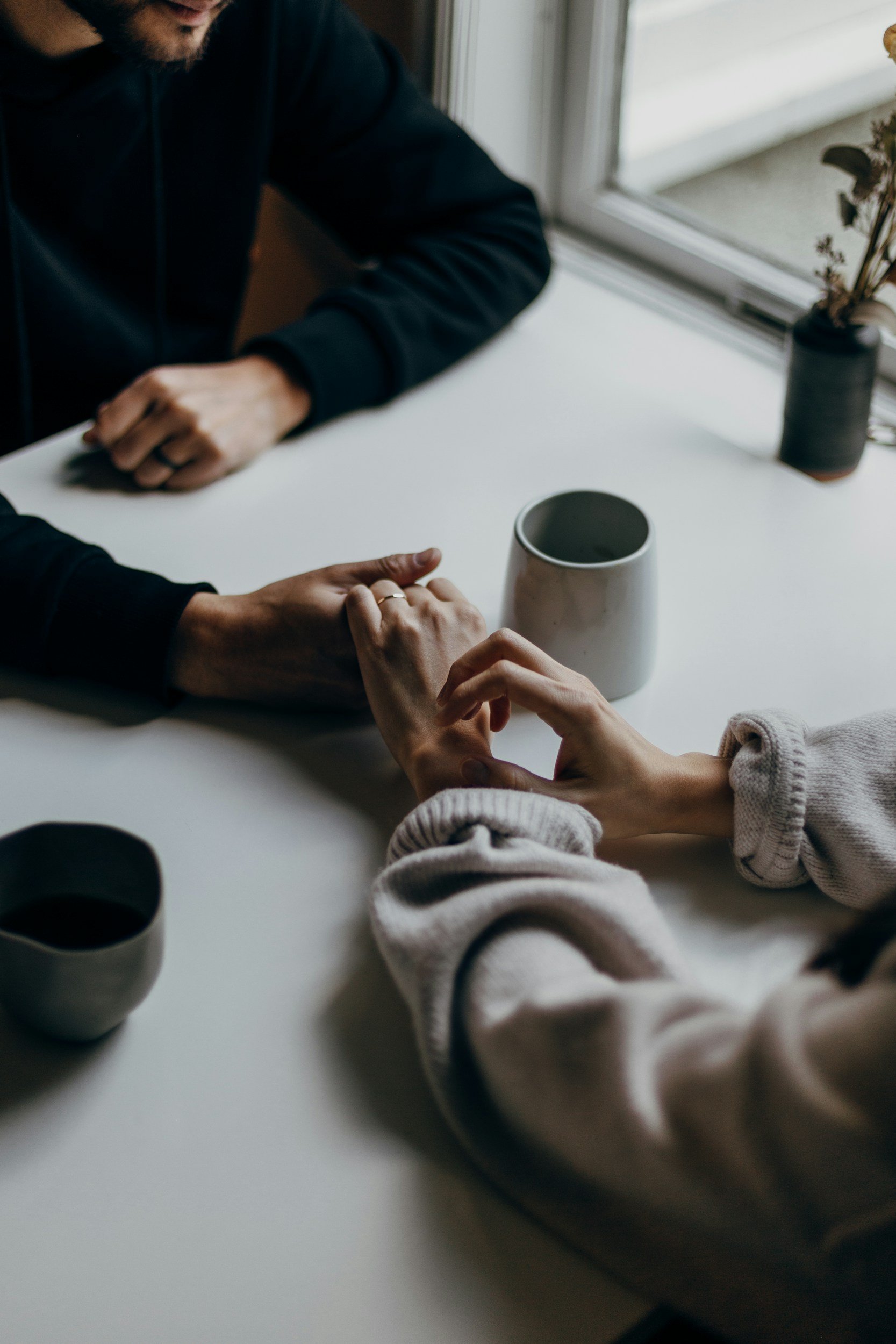
Attachment patterns in the room, not as diagnoses but as maps
Attachment language helps but can become a label that boxes people in. I prefer to use it as a map of default settings. Anxiously leaning partners track cues of distance and push for clarity. Avoidantly leaning partners track cues of criticism and pull back to get their bearings. These moves are intelligent survival strategies. They also create loops: one reaches, the other retreats, and both feel confirmed in their fears.
A reliable exercise is to identify the protest pattern in the first 10 minutes of a fight. If one person begins with rapid questions and the other responds with brief answers, we slow it down and add a time-out structure that is not a door slam. Two minutes of regulated breathing, followed by a prewritten first sentence, keeps both people in the window of tolerance. Over a few sessions, the early minutes of conflict feel less like a cliff and more like a slope you can walk down together.
The parts within us that seek closeness and safety
Many couples benefit from Parts work, drawn from approaches like Internal Family Systems. Inside each partner, different parts hold different agendas. A playful part wants novelty at 10 pm, a vigilant part wants the kitchen clean first, a younger part is terrified of being too much. When these parts speak over one another, the partner across from you hears static. If each person can name their parts and anchor in a steadier Self, intimacy has more room to breathe.
I often invite couples to introduce their parts out loud. A husband once said, “My problem solver wants to fix this tonight. My college-age part wants to escape to my headphones. The steadier part of me, the one sitting with you now, wants to hear you.” His wife exhaled for the first time in weeks because she no longer felt she was arguing with a fog. Parts work is not theatrical, it is a practical way to align inner teams so that the version of you who can love, listen, and set limits gets to drive.
When anxiety and depression complicate closeness
Anxiety narrows attention and seeds negative predictions. Depression flattens motivation and taste for pleasure. Both states distort signals between partners. In Anxiety therapy, we work with the catastrophizing mind that reads a paused text as rejection, or a tired response as contempt. We practice cognitive reframing, but I also coach behavioral experiments: wait 20 minutes before sending the follow-up message; ask for reassurance with one sentence that names the ask. These micro-adjustments prevent spirals.
In Depression therapy, pleasure needs scaffolding. I have seen couples rediscover sexual connection once they upgrade basic energy hygiene. That might mean moving bedtime earlier three nights a week, sunlight within an hour of waking, and a 15-minute movement window in the afternoon. These are not romance tips, they are mood stabilizers that make arousal possible. A partner living with depression often carries shame for low desire. The other partner, reading the withdrawal as personal, feels rejected. A clear plan that normalizes energy dips and schedules intentional affection breaks the personalization loop.
Sometimes individual therapy is essential alongside Couples therapy. If panic attacks, trauma triggers, or untreated sleep apnea are present, intimacy work stalls without parallel care. I have encouraged one partner to begin CBT for insomnia while the couple builds rituals of quiet touch that do not attempt arousal. Naming the medical and psychological threads protects both people from the myth that love alone should cure everything.
Cultural nuance and therapy that respects lived context
Intimacy norms are not one-size-fits-all. Family scripts, immigration stories, and racialized experiences shape what feels safe or allowed. As an Asian-American therapist, I pay close attention to how duty, privacy, and interdependence show up in couples from collectivist backgrounds. A partner might interpret “I need time alone” as abandonment because their upbringing equated togetherness with loyalty. Another might struggle to discuss sex openly after years of silence around bodies at home.
The goal is not to discard culture but to honor it while expanding choice. I once worked with a couple who supported extended family financially. Money conversations were loaded. We explored how family pride intersected with erotic play. Their eventual ritual involved a monthly check-in about money where they lit a small candle for each household they supported, acknowledged gratitude, then turned the page to their own desires. That bridge allowed them to feel generous and sovereign, not tugged in opposite directions.
Communication, but not the scripted kind
Scripts help https://rafaelfajo309.trexgame.net/somatic-therapy-for-trauma-related-anxiety at first. You may hear classic structures like “When you did X, I felt Y, and I need Z.” They reduce ambiguity and blame. Still, intimacy thrives on spontaneity. After early scaffolding, I encourage partners to speak in their own cadences again, with two constraints: keep sentences short enough to remember, and check the body as you go. If you feel your chest tighten, that is data. Name it. You might say, “I can feel my throat getting tight as I say this, which tells me I’m worried you’ll dismiss me.” That meta-commentary is intimacy in action.
Repair matters more than perfect communication. In one study sample I often reference with clients, stable couples did not fight less, they repaired faster and with more goodwill. In session, we practice quick repairs: a hand to the heart, eye contact for three breaths, or a simple “I lost you, can we rewind ten seconds?” These tiny bridges prevent meetings from derailing, and they are learnable within a month for most pairs.
Sexual intimacy: desire, turn-on, and pressure’s quiet sabotage
Many couples believe desire arrives before touch. For a high percentage of people, especially those socialized as female, arousal often follows warm-up. Responsive desire is not lower desire. It needs cues: safety, novelty, tenderness, and enough time for the body to shift gears. I ask partners to design a 20-minute on-ramp two nights a week that is explicitly not a promise of intercourse. Warm oil on shoulders, a bath together, a walk while holding hands, or shared breath in bed can recalibrate associations from pressure to possibility.
Avoid the scorecard. When couples track frequency like a KPI, the nervous system treats sex as a job and the body rebels. Instead, track ingredients. Did we share affection today that was not instrumental? Did we send one flirtatious message this week? Did we protect one tech-free hour after dinner? Over six to eight weeks, ingredients accumulate and frequency follows naturally.
A simple weekly practice partners can try
- Choose two 10-minute windows this week for “micro-reconnects.”
- Sit face to face, feet on the floor, phones away, and set a quiet timer.
- Person A shares one moment from the week when they felt close and one when they felt distant. Person B mirrors back what they heard, then switches roles.
- End with one sentence each: “Something I appreciate,” and “One small thing I’d like to try.”
- Do not problem-solve beyond the time box. Let small repairs seed larger change.
These brief rituals reduce the gap between small hurts and large fights. Couples who keep them for six consecutive weeks often report that bigger conversations feel less loaded because they have already practiced staying inside connection during minor discomfort.
What early Couples therapy often looks like
First sessions build safety. I map the fight cycle, listen for language that spikes reactivity, and gather a short personal history for each partner. I want to know about formative relationships, griefs that still echo, and how your body tells you it is overwhelmed. By session two or three, we co-create a shared goal that is specific and testable: more affectionate touch on weeknights, less stonewalling during conflict, or a plan to initiate sex that feels fair to both.
I like to measure progress in tangible ways. One couple started at zero evenings a week where both felt connected. By week four they had two evenings with a 6 out of 10 sense of closeness. By week eight they reached three to four evenings with a 7 or 8. Numbers are not romance, but they help a discouraged brain see momentum.
Common stuck points and what loosens them
One frequent stall is asymmetry of urgency. The partner who wants change now pushes hard. The other, feeling chased, digs in. We convert urgency into clarity. What would progress in two weeks look like in observable behaviors? Another stall arises when apologies feel coerced. An apology given from a defensive state does not land. Slowing down to name impact before intent softens the ground. You might hear, “Hearing that story at dinner without warning hit a raw spot for me,” before, “I know you meant it as a joke.”
Trauma history can also flood the room. If one partner dissociates during conflict, we add anchor practices: feet pressing into the floor, an agreed-upon pause phrase, and post-argument repair appointments scheduled within 24 hours. When partners realize the nervous system is an ally to court, not an enemy to conquer, dignity returns to the process.
Repair after betrayal or secrecy
Affairs, financial secrets, or hidden addictions crush trust, but I have seen couples rebuild after such breaks. The early phase requires boundaries that feel strict and compassionate. A partner who strayed may agree to radical transparency for a period: location sharing, device access, or check-ins. These are not long-term ideals, they are splints on a fracture. The injured partner often needs structured spaces to ask repetitive questions without being shamed for doing so. Over 3 to 6 months, we work to transition from surveillance to reliability built on consistent behavior.
Meaning-making matters too. What conditions in the relationship and the individual allowed secrecy to take root? That analysis is not blame shifting, it is risk reduction. Couples who do this work thoroughly often emerge with cleaner boundaries, more honest desire conversations, and a shared commitment to early repair.
Remote versus in-person sessions
Video sessions can be effective for intimacy work, especially for couples with young children or heavy travel. The home environment becomes part of therapy. I ask partners to sit in the places where they typically argue, then we rehearse new moves in real time. In-person work still has advantages when bodies carry high reactivity. Subtle cues are easier to catch, and regulated presence is more potent across a coffee table than a screen. Some pairs blend both: in person for monthly deep dives, video for interim coaching.
Choosing a therapist, and what to ask
Look for someone who can hold emotion and coach behavior. Ask about their comfort with sexuality, trauma, and cultural dynamics. If you need an Asian-American therapist because cultural context feels central, say so. Competence is not one-size-fits-all. In the first meeting, notice how your body feels. Do you breathe easier, feel seen, and leave with one concrete practice? A good fit is less about perfect alignment and more about feeling that this person can challenge you while protecting your dignity.
When to take a break from therapy
If sessions become a place to reenact fights rather than transform them, pause to recalibrate. I sometimes assign a two-week break with a specific home protocol: no hot-topic arguments after 9 pm, a daily five-minute check-in, and a rule to log ruptures for later discussion rather than tackle them while flooded. Breaks are not failures. They are intervals to practice skills without the weekly pressure cooker.
Measuring progress without strangling it
Progress is felt before it is graphed. You may notice you laugh more while doing dishes, or that Sunday nights carry less dread. Still, it helps to anchor in a few metrics over eight to twelve weeks. I often use three anchors: frequency of affectionate, non-sexual touch; number of successful repairs after conflicts; and self-rated closeness on a simple 1 to 10 scale. If numbers stall, we get curious. Do we need to address sleep, alcohol use, or an untreated mood disorder with targeted Anxiety therapy or Depression therapy? Do we need to reduce external stressors for a season?
A tale of two evenings
Two couples, similar profiles, arrived within months of each other. Both had two children under eight, demanding jobs, and dwindling sex lives. Couple A focused exclusively on communication skills. They improved accuracy in arguments, but exhaustion still ruled their nights. Couple B combined skills with somatic pacing and micro-changes in routine. They protected a 45-minute window after the kids’ bedtime four nights a week: no chores, soft lighting, physical closeness with no sexual agenda. They also adjusted dinner timing to avoid late-night glucose crashes that left them irritable. Within six weeks, Couple B reported spontaneous desire returning on its own. The difference was not moral fiber, it was an honest audit of bodies and schedules plus steady practice.
The quiet power of appreciation
Gratitude cannot be deployed as a tactic to get more sex or fewer fights. When appreciation becomes currency, it loses charge. But in a steady practice, five specific appreciations a week can rewire a couple’s perceptual filter. Specificity matters. “Thanks for organizing the dentist appointment” carries more weight than “You’re great.” Over two months, many couples notice more generosity in themselves. It is easier to give when you feel seen, and it is easier to risk closeness when you do not dread criticism.
When partners want different depths
Some pairs hit a mismatch: one craves high emotional intimacy, the other prefers a lighter texture. Therapy does not force uniformity. We build a Venn diagram of overlap and negotiate rituals that respect difference. Perhaps deep dives happen once a week for 30 minutes, and the rest of the time connection looks like shared music, cooking, or exercise. Erotic templates often differ too. Naming preferences openly helps: slow-building touch versus fast escalation, verbal play versus quiet. Curiosity without pressure is the engine here.
If you feel like roommates
The “roommates” complaint is common after 5 to 10 years together, often after children. You can resurrect eros, but not by pretending you are dating again. Eros thrives on separateness within togetherness. Plan evenings where you share an experience that gives you fresh eyes on each other, not just shared logistics. That can be a class, a dance night, or even working side by side on individual projects with a playlist you both love. Desire often returns when we see our partner in their element, not when we stare at each other trying to manufacture heat.
When the relationship is safe but touch is fraught
Past assault, medical trauma, or negative sexual education can make touch complicated even in a trusting bond. Here, consent practices become artistry rather than bureaucracy. I teach a four-option system for any touch: yes, no, yes with conditions, and maybe later with a check-back time. Partners learn to value “yes with conditions” as a sign of agency, not a half-hearted concession. Over time, bodies relearn that boundaries are honored, which paradoxically increases willingness.
How a first course of Couples therapy often unfolds
- Weeks 1 to 2: Map patterns, stabilize hot spots, and create a small daily or weekly ritual.
- Weeks 3 to 5: Add somatic regulation, refine conflict moves, and begin parts language.
- Weeks 6 to 8: Rebuild affectionate touch, experiment with low-pressure erotic time, measure progress.
- Weeks 9 to 12: Tackle a deeper theme like betrayal recovery, parenting stress, or money gridlock as regulation skills consolidate.
- Beyond 12: Shift to biweekly or monthly sessions focused on maintenance and course correction.
Timelines vary. Some couples need longer early phases if trauma or medical issues are in play. Others move faster once a few keystone habits click. The arc is less about speed and more about sustained habits that outlast the therapy container.
Working with grief, illness, and life transitions
Serious illness, fertility journeys, or the death of a parent can mute desire and flood the bond with fear. Intimacy changes shape during these seasons. The goal becomes companionship with dignity, then a gradual return to play. I have seen couples hold hands during chemo infusions and schedule small pockets of beauty, like a 10-minute view of the sky after appointments. Sex may pause or transform into gentler exploration. Clear naming protects both partners from unspoken disappointment.
What you can expect to feel if it is working
As therapy progresses, you may notice arguments that used to take hours now take 20 minutes. You might feel silly or tender more often. Initiations for sex feel safer because a no is not catastrophic and a yes is not coerced. You recover faster from misses. Your calendars still hum, but your pauses feel richer. Friends might comment that you seem more at ease. None of this is linear. There will be regressions after tough weeks. But the new baseline drifts higher.
The work of intimacy is not about becoming bulletproof. It is about becoming repair-capable, curiosity-rich, and physiologically steadier together. When couples commit to that path, with or without formal therapy, the space between them starts to feel like a place you can rest and play. That is the texture most partners are seeking when they say they want to feel close again. It is not just fewer fights, it is the quiet knowledge that your inner world has a home where it can be met.
Laura Bai Therapy
Name: Laura Bai Therapy
Address: 154 Santa Clara Ave, Oakland, CA 94610-1323
Phone: (510) 485-0725
Website: https://www.laurabai.com/
Email: [email protected]
Hours:
Sunday: Closed
Monday: Closed
Tuesday: 10:00 AM – 6:00 PM
Wednesday: 10:00 AM – 6:00 PM
Thursday: 10:00 AM – 6:00 PM
Friday: Closed
Saturday: Closed
Open-location code / plus code: RP9W+JQ Oakland, California, USA
Coordinates: 37.8190716, -122.2531102
Map/listing URL: https://www.google.com/maps/place/Laura+Bai+Therapy/@37.8190716,-122.2531102,683m/data=!3m2!1e3!4b1!4m6!3m5!1s0x808f876fb597d525:0x96cdb2f815606cd9!8m2!3d37.8190716!4d-122.2531102!16s%2Fg%2F11yfq9f5rh
Embed iframe:
Socials:
Facebook: https://www.facebook.com/laurabaitherapy
Instagram: https://www.instagram.com/laurabaitherapy/
LinkedIn: https://www.linkedin.com/company/laura-bai-therapy/
TikTok: https://www.tiktok.com/@laurabaitherapy
YouTube: https://www.youtube.com/@LauraBaiTherapy
The practice focuses on somatic therapy for Asian Americans healing from intergenerational trauma, cultural pressure, perfectionism, burnout, caretaking patterns, and emotional disconnection.
Listed specialties include anxiety therapy, depression therapy, therapy for perfectionism, disconnection and dissociation therapy, burnout therapy, healing from caretaking and codependency, guilt and shame therapy, and therapy for relationship conflicts.
Listed modalities include Attachment-Focused EMDR, somatic therapy, couples therapy, family therapy, and parts work.
Laura Bai, LMFT #126650, offers video sessions and in-person sessions in Oakland, with a free initial consultation listed on the official contact page.
The practice is locally positioned for clients in Oakland, the Lake Merritt and Grand Lake area, Alameda County, and nearby Bay Area communities.
Laura Bai Therapy may be a fit for adults, couples, and families seeking culturally responsive, trauma-informed therapy that includes mind-body awareness and relationship-focused work.
Prospective clients can call (510) 485-0725, email [email protected], or visit https://www.laurabai.com/ to ask about consultation options and availability.
The public map listing for Laura Bai Therapy can help clients verify the Santa Clara Avenue office before planning an in-person appointment.
Popular Questions About Laura Bai Therapy
What is Laura Bai Therapy?
Laura Bai Therapy is an Oakland psychotherapy practice focused on somatic, trauma-informed, and culturally responsive therapy for Asian Americans healing from intergenerational trauma and related emotional patterns.
Who is Laura Bai?
The official site lists Laura Bai as a Licensed Marriage and Family Therapist, license #126650. The site’s footer also lists the practice name Laura Bai, Marriage & Family Therapy and Consulting Inc.
Where is Laura Bai Therapy located?
The listed address is 154 Santa Clara Ave, Oakland, CA 94610-1323.
Does Laura Bai Therapy offer online therapy?
Yes. The official contact page says Laura Bai provides video sessions and in-person sessions in Oakland, California.
What services does Laura Bai Therapy list?
Listed services include anxiety therapy, depression therapy, therapy for perfectionism, disconnection and dissociation therapy, burnout therapy, healing from caretaking and codependency, guilt and shame therapy, therapy for relationship conflicts, couples therapy, family therapy, somatic therapy, Attachment-Focused EMDR, and parts work.
Does Laura Bai Therapy specialize in somatic therapy?
Yes. The official site describes somatic therapy as central to the practice and says it is integrated with EMDR, parts work, and emotionally focused approaches.
Who does Laura Bai Therapy work with?
The somatic therapy page describes work with Asian American adults, especially second- and 1.5-generation immigrants, highly educated professionals, people exploring cultural identity and belonging, and people struggling with perfectionism, family expectations, and self-criticism. The site also lists services for individuals, couples, and families.
What are Laura Bai Therapy’s listed hours?
The matching public listing shows Tuesday, Wednesday, and Thursday from 10:00 AM to 6:00 PM, with Monday, Friday, Saturday, and Sunday closed. Appointment availability should be confirmed directly.
Is Laura Bai Therapy an emergency mental health provider?
No crisis or emergency service was verified for this dataset. Anyone in immediate danger or experiencing a mental health crisis should call 911, contact 988, or go to the nearest emergency room.
How can I contact Laura Bai Therapy?
Call (510) 485-0725, email [email protected], visit https://www.laurabai.com/, or use the listed social profiles: https://www.facebook.com/laurabaitherapy, https://www.instagram.com/laurabaitherapy/, https://www.linkedin.com/company/laura-bai-therapy/, https://www.tiktok.com/@laurabaitherapy, and https://www.youtube.com/@LauraBaiTherapy.
Landmarks Near Oakland, CA
Laura Bai Therapy is located on Santa Clara Avenue in Oakland, with in-person sessions available locally and video sessions also listed by the practice. Clients near these Oakland landmarks can call (510) 485-0725 or visit https://www.laurabai.com/ to ask about consultation options and appointment availability.
- 154 Santa Clara Ave — The listed office address for Laura Bai Therapy; clients can use the map listing to verify the office before visiting.
- Santa Clara Avenue — The local street connected with the practice’s Oakland office location.
- Lake Merritt — A major Oakland landmark near the broader office area and a practical reference point for local clients.
- Grand Lake — A nearby Oakland neighborhood and commercial area close to Lake Merritt and Santa Clara Avenue.
- Grand Lake Theatre — A recognizable neighborhood landmark near the Grand Lake and Lake Merritt area.
- Piedmont Avenue — A nearby Oakland corridor with shops, offices, and neighborhood access points for clients traveling locally.
- Morcom Rose Garden — A well-known Oakland garden landmark near the Grand Lake and Piedmont Avenue areas.
- Lakeshore Avenue — A familiar local corridor near Lake Merritt and Grand Lake for clients orienting around the office area.
- Oakland Museum of California — A major cultural landmark near central Oakland and Lake Merritt.
- Downtown Oakland — A central business and transit area; clients can use the website to ask about in-person or video session options.
- Rockridge — A nearby North Oakland neighborhood; clients in the area can contact the practice to ask about therapy fit and availability.
- Temescal — A North Oakland neighborhood within the broader local service area for clients seeking Oakland-based psychotherapy.